How to Seal Drafty Windows and Doors
Cold air sneaking past your windows and doors is one of the cheapest problems to fix and one of the most expensive to ignore. If you can feel a draft, seal it n
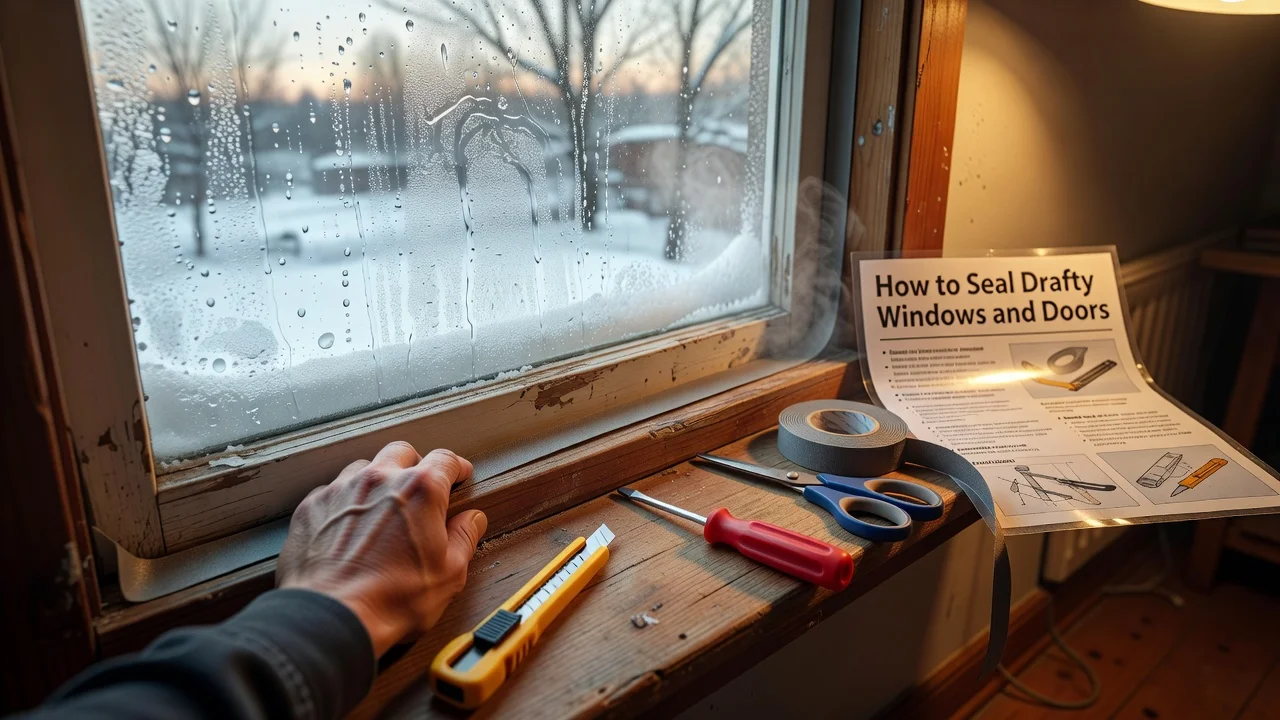
Cold air sneaking past your windows and doors is one of the cheapest problems to fix and one of the most expensive to ignore. If you can feel a draft, seal it now: the average U.S. household loses 10–25% of its heated or cooled air through gaps around windows and doors, and a single 1/8-inch crack around one window can cost you $30–$60 a year in wasted energy at 2026 utility rates. The fix is almost always a $10–$40 Saturday project, not a $5,000 window replacement. This guide walks you through how to find the drafts, seal them the right way, and decide when to stop and call a pro.
Why Windows and Doors Draft in the First Place
Most drafts aren't a window problem. They're a seal problem. The glass, frame, and sash are usually fine. What's failed is the weatherstripping, caulk, or door sweep that sits between the moving parts and the stationary frame.
The usual suspects:
- Aged caulk that has pulled away from the frame or cracked after 5–10 freeze-thaw cycles.
- Worn weatherstripping (felt, foam, vinyl, or rubber) that has flattened, torn, or fallen off.
- Warped sashes or doors, often from humidity swings or a house that's settled.
- Shrinking house framing — new homes keep moving for the first 2–3 years, and that movement opens gaps that didn't exist at move-in.
- Missing or damaged door sweeps at the bottom of exterior doors.
The U.S. Department of Energy estimates that air sealing (windows, doors, attic, outlets) is the single most cost-effective energy upgrade a homeowner can do, returning 10–20% on cost in year one. Start with the leaks you can feel.
How to Find the Drafts (Before You Buy Anything)
Don't guess. A 5-minute test tells you exactly where air is moving and what to buy.
1. The incense or lighter method. Close all doors and windows, turn off the HVAC, and hold a lit stick of incense (or a lighter) near the edges of suspect windows and doors. If the smoke wavers or gets pulled in a direction, you've got a leak.
2. The hand test. On a cold or windy day, run your palm slowly around the frame, sash stops, and where the lock meets the frame. Cold spots = leaks.
3. The thermal leak detector. A $20–$35 infrared thermometer from any big box store in 2026 will show temperature drops of 2°F or more around a gap. Not required, but useful for sneaky drafts behind furniture.
4. The paper test for doors. Close a door on a piece of paper or a $1 bill. If you can slide it out without resistance, the weatherstripping isn't sealing.
Write down what you found and where. Most homes have 3–6 real draft sources, not 20. Focus there.
Sealing Drafty Windows: DIY Steps by Window Type
Different windows need different fixes. Match the repair to the window, not the other way around.
Double-Hung and Casement Windows
- Remove the old weatherstripping from the sash stops and the meeting rails (where the two sashes meet in the middle). Pull slowly so you don't damage the wood.
- Wipe the channel clean with a damp rag and let it dry.
- Apply new self-adhesive V-strip or foam tape to the sash stops. In 2026, a quality roll runs $6–$12 and covers 1–2 windows.
- For the meeting rails, use adhesive-backed EPDM rubber or vinyl (Frost King, M-D, or 3M branded). It lasts longer than foam and survives full-sun exposure.
- Caulk the exterior joint where the trim meets the siding — not where the trim meets the window frame, or you'll seal the window shut.
Sliding Windows
Sliders lose most heat at the track and where the sashes meet. The fix:
- Replace the pile weatherstripping along the vertical edges of each sash. A bag of pile with adhesive backing is $8–$14.
- Caulk the interior trim joints with a paintable latex caulk. Don't caulk the exterior slider tracks — the sash needs to drain water out.
Fixed (Picture) Windows
Picture windows don't move, so drafts only come from three places: the exterior caulk joint, the interior caulk joint, or a failed glazing seal. Re-caulk both sides with a high-quality exterior silicone or urethane ($6–$10 per tube), and if you see fog between the panes, the insulated glass unit has failed — that's a glass replacement issue, not a sealing issue.
Weatherproof Doors: The Three-Line Defense
An exterior door is really three separate gaps, and you have to seal all three.
| Door Gap | What to Use | 2026 Cost | Lifespan |
|---|---|---|---|
| Top & sides (jamb) | Compression weatherstripping (kerf-in or adhesive vinyl) | $10–$22 per door | 3–7 years |
| Bottom (under door) | Door sweep (screw-on, brush, or U-shaped vinyl) | $8–$25 per door | 2–5 years |
| Threshold-to-floor | New threshold or threshold seal; if the floor is uneven, a draft stopper (silicone bulb or weighted fabric) | $12–$30 | 5–10 years |
How to install:
- Close the door and look for daylight along the jamb. Mark the high spot on the hinge side — most doors sag here, so the gap on the latch side is usually bigger.
- Remove the old weatherstripping, clean the surface with rubbing alcohol, and let it dry for 5 minutes.
- Install the new weatherstripping so the door compresses it by about 1/8 inch when closed. Too tight and the door won't latch; too loose and air still moves.
- Set the door sweep so the rubber or brush barely touches the threshold. If the threshold is rotted or the floor is concrete, seal the gap with a quality exterior caulk on the outside and a draft stopper on the inside.
- Test by closing the door on that $1 bill again. You should feel real resistance pulling it out.
Don't paint vinyl or rubber weatherstripping. Paint makes it stiff, and stiff weatherstripping leaks. Buy the color you want.
DIY Window Insulation: The Cheap, Last-Resort Option
If your budget is $0–$20 and the window is single-pane, ugly, or you're renting, plastic window film works. In 2026 a 6-pack of 36"x62" shrink film kits is $9–$15 and will do 6 standard windows.
- Clean the frame, tape the film to the interior trim, and shrink it with a hair dryer.
- The film cuts drafts and adds an R-value of about 1, but it traps moisture. If you see condensation between the film and the glass, remove the film and switch to a proper caulk-and-weatherstrip fix on the exterior.
- Don't use it on windows you open, and don't expect it to look invisible. It won't.
If you're going to keep the home long-term, weatherstripping + caulk is a better investment than plastic film. The plastic is a 1–2 season patch.
Cost, Time, and When to Stop and Call a Pro
A typical whole-house draft sealing job for a homeowner with 8–12 windows and 2–3 exterior doors runs:
| Task | DIY Time | DIY Cost (2026) | Pro Cost (2026) |
|---|---|---|---|
| Re-caulk exterior windows | 3–5 hours | $20–$45 (caulk + caulk gun) | $300–$700 |
| Replace window weatherstripping | 4–6 hours | $50–$120 | $250–$500 |
| Weatherproof 2–3 exterior doors | 2–3 hours | $30–$80 | $180–$350 per door |
| Full home air-seal package | 1–2 days | $100–$250 in materials | $600–$1,500 |
Stop and call a licensed contractor if: the draft is between the glass panes (failed insulated glass unit), the window frame is rotted or soft to the touch, the door frame has water damage, or the window is part of a structural wall with knob-and-tube or aluminum wiring you can't see. Sealing over hidden damage traps moisture and can void your homeowner's insurance.
For everything else — caulk, foam tape, weatherstripping, door sweeps, draft stoppers — this is solid DIY work. Save the money, watch one 10-minute YouTube video on caulking technique, and start at the worst draft you found.
FAQ
How much money will sealing drafty windows actually save me?
In 2026, with average U.S. electricity at about 17¢/kWh and natural gas around $1.45/therm, sealing the major drafts in a typical home saves $200–$450 a year on heating and cooling. The payback on $100–$250 of materials is usually under 12 months. Energy Star's home sealing guide has a calculator you can plug your own utility rates into.
What is the best weatherstripping material for a door in 2026?
For the top and sides of a door, use compression-style vinyl or EPDM rubber (look for kerf-in or adhesive-backed V-strip). Foam tape is cheaper but flattens in 1–2 years. For the bottom, a screw-on door sweep with a vinyl or brush insert outlasts stick-on versions by 3–4 years.
Can I use caulk instead of weatherstripping on a window?
Only on the non-moving parts — the exterior trim joints, the interior trim joints, and the stationary frame. Never caulk where two parts slide or compress against each other, or you'll glue the window shut. The moving parts need a flexible weatherstrip.
How do I know if my window needs new weatherstripping or a full replacement?
If the glass is intact, the frame is solid wood or undamaged vinyl, and the draft goes away when you tape over the seams, you need weatherstripping. If the frame is cracked, rotted, warped, or the insulated glass has fog between the panes, you're past weatherstripping and need a window replacement or glass unit swap.
Is a draft stopper worth buying?
Yes, for two situations: a historic door with an uneven floor (where no threshold or sweep will seal), or a bedroom door where you want to block noise and light as well as cold. In 2026, a quality weighted-fabric or silicone-bulb draft stopper runs $12–$25 and pays for itself in a single winter.
What's the order I should seal things in?
Start with the worst single draft you found (almost always a door or a window above a bed or desk). Then do the other exterior doors. Then the windows. Then the electrical outlets on exterior walls and the attic hatch. If you do it in that order, you'll feel the difference in the first hour and know where to spend the rest of your weekend.
~1,744 words. Published 2026-06-10. Pillar: Money-saving.
Was this article helpful?
Get weekly DIY tips
No spam, unsubscribe anytime.
Newsletter signup coming soon.