How to Silence a Noisy Refrigerator
A noisy refrigerator is one of those problems that sneaks up on you. The hum is barely there on day one, then six months later it's the loudest thing in the kit
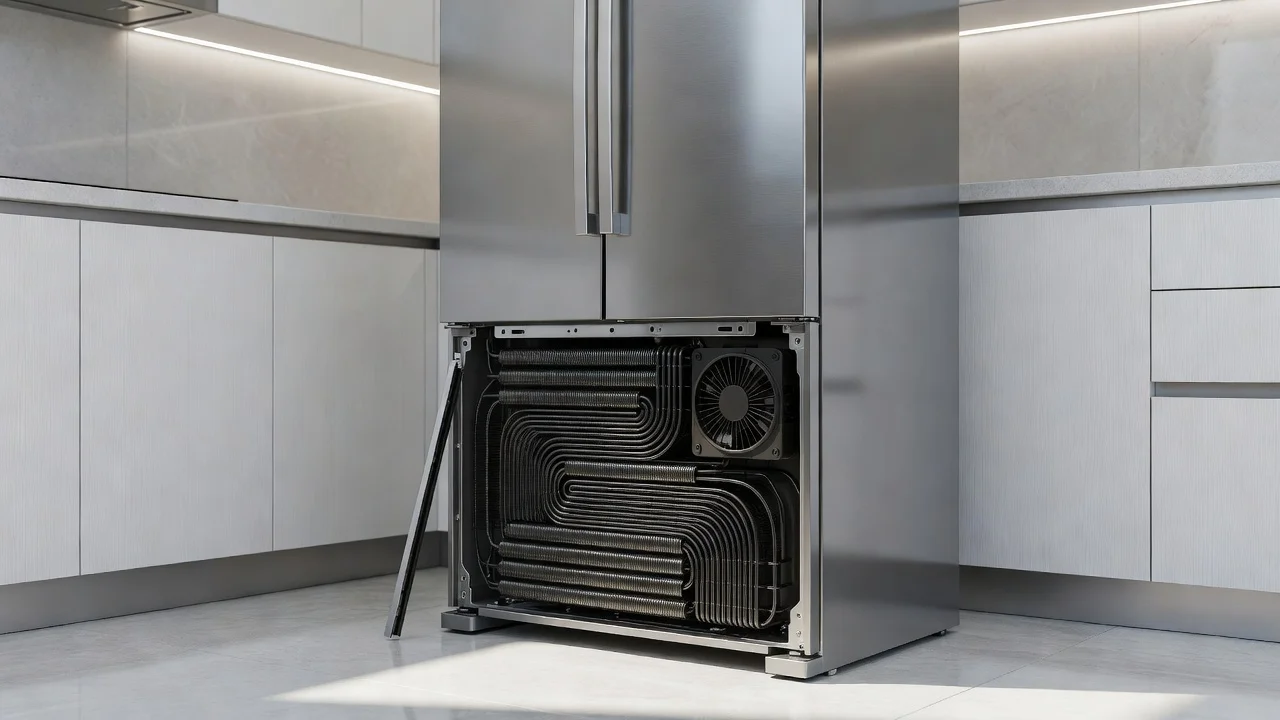
A noisy refrigerator is one of those problems that sneaks up on you. The hum is barely there on day one, then six months later it's the loudest thing in the kitchen. Most of the time the fix is a $0 to $40 part and a Saturday afternoon, not a service call. This guide walks you through identifying the exact source of a refrigerator loud enough to bug you, then walks you through the fixes in the order you should try them.
You'll learn what each common sound actually means (compressor hum vs. evaporator fan rattle vs. drain pan buzz), how to confirm the culprit in 10 minutes, which repairs are safe DIY, and when to stop and call a licensed tech. By the end you'll know whether you need a $15 anti-vibration pad, a $25 fan motor, or a professional diagnostic that runs $120-$250 in 2026.
What "Normal" Refrigerator Noise Sounds Like
A 2026 fridge is never silent. Modern variable-speed compressors cycle up and down based on demand, and you'll hear a low, even hum for 30 to 90 minutes at a stretch as the unit pulls down temperature. The evaporator fan runs whenever the door is closed and circulates air through the freezer and fresh food compartments. The condenser fan (on most bottom-coil and side-coil models) pushes warm air out near the floor. A defrost cycle kicks in roughly every 6 to 10 hours and you may hear a brief hiss, sizzle, or pop as the heater melts frost off the evaporator coils.
The Frigidaire noise guide lays out the same sound categories other manufacturers use, and they're a useful baseline: boiling or gurgling, rushing air, hissing, clicking, buzzing, and water dripping. If your refrigerator is making any of those sounds and they're not getting louder over weeks, you probably have a normal, healthy machine.
The biggest tell that something is wrong is a change in the noise pattern. A fridge that suddenly starts buzzing, knocking, or grinding — or one that ramps from quiet to loud over a few weeks — almost always has a fixable mechanical issue.
Common Sounds and What They Usually Mean
| Sound | Likely Source | Where It Comes From | Typical Fix | DIY? |
|---|---|---|---|---|
| Low hum (steady) | Compressor | Back-bottom of unit | Normal, no fix needed | No |
| Rattling/buzzing | Condenser fan hitting coil or dust | Back of unit | Clean coils, replace fan motor | Yes |
| Clicking every few minutes | Start relay on compressor | Back-bottom | Replace relay ($20-$45) | Yes |
| Knocking/thumping | Water hammer in supply line | Behind fridge | Install water hammer arrestor | Yes |
| High-pitched whine | Evaporator fan bearing | Back of freezer | Replace fan motor ($25-$60) | Yes |
| Ticking once an hour | Defrost timer (old units) | Inside fridge | Replace timer ($30-$55) | Yes |
| Popping/snapping from ice chute | Dispenser solenoid | Front of door | Normal, replace if constant | Maybe |
| Sizzling every 6-10 hours | Defrost heater | Inside freezer wall | Normal, no fix needed | No |
Step 1: Locate the Noise Before You Touch Anything
Unplug the fridge or flip the breaker. The two minutes you spend identifying the source will save you an hour of pulling the wrong panels. Push the fridge forward enough to reach the back, then have a second person plug it in briefly while you listen. Better yet, do the diagnosis in three passes:
- Stand behind the fridge with the door closed. Note the sound's character and rhythm.
- Open the freezer and listen for an immediate change. If the noise gets louder when the door is open, it's the evaporator fan. If it stops when the door is open, it's the evaporator fan turning off via the door switch.
- Pull off the rear lower access panel (usually 4-6 screws) and inspect the condenser fan and compressor area. Use a flashlight and look for dust bunnies, a misaligned drain pan, or a loose wire harness.
The 10-second evaporator fan test: open the freezer and hold the door switch in (most fridges have a plunger-style switch near the latch). If the fan noise ramps up dramatically, you've found the problem. The fan motor is the #1 cause of a refrigerator loud enough to hear across the room.
Step 2: The Free Fixes (Do These First)
Before buying a single part, run through this checklist. Roughly 40% of "loud fridge" complaints are caused by one of these:
Level the unit. A fridge that's even a quarter-inch out of level will rock as the compressor cycles. Most models have adjustable front legs you can turn by hand or with a 9/16 wrench. You want a very slight backward lean so the door closes on its own, but no front-to-back wobble.
Pull it away from the wall. The water line, power cord, or a drain tube touching the back of the cabinet is a classic rattler. Leave 2 to 3 inches of clearance behind the unit, then secure the supply line to the floor or a wall stud with a plastic clip.
Secure the drain pan. The condensate drain pan sits on top of the compressor. After a few years of vibration, the pan can shift off its mounting tabs. Pop it back in place and bend the tabs slightly outward to grip. This is the fix for the most common "noisy refrigerator from the bottom" complaint.
Clean the condenser coils. Coils under or behind the fridge collect pet hair, dust, and kitchen grease. A dirty coil makes the compressor work harder, run hotter, and cycle more often. Use a coil brush (affiliate link) ($8-$12) and a shop vac. Do this once a year on every fridge you own.
2026 rule of thumb: if the noise started within the last 6 months and the fridge is more than 7 years old, clean the coils and level the unit before you spend a dime on parts. About 1 in 3 "compressor going bad" diagnoses turn out to be a $9 coil cleaning.
Step 3: Replace the Parts You Can Safely Reach
Once the free fixes don't solve it, you're into parts territory. All of these are safe DIY if you unplug the fridge first and take a phone photo of the wiring before disconnecting anything.
Condenser fan motor. $25-$40 for the part. Remove the back panel, unscrew the fan housing, swap the motor, and reattach the wiring harness. Add 45 minutes to an hour.
Evaporator fan motor. $25-$60. This one is inside the freezer wall, so you need to empty the freezer, remove the back panel inside it, and swap the motor. Allow 1 to 2 hours including the inevitable ice chip cleanup. The fan blades often come as a separate $15 part, so check whether the motor or the blade is actually the worn piece.
Start relay and overload. $20-$45. The compressor's start relay is a small plastic module plugged into the side of the compressor body. If your fridge clicks every few minutes and the compressor never quite starts, the relay is the answer about 80% of the time. The part is brand-specific, so search by your model number.
Anti-vibration pad. $15-$30 per set. Foam or rubber pads under the front feet absorb compressor vibration. Useful in apartments, condos, and second-floor kitchens where the structure amplifies hum. They won't fix a mechanical problem, but they often take the edge off a normal compressor hum that the homeowner finds annoying.
If you're diagnosing electrical components, the U.S. Department of Energy's guide to appliance repair safety is worth reading before you open anything up. And for any repair that involves sealed-system work (the compressor itself, refrigerant lines, the evaporator coil), stop and call a pro — those require EPA Section 608 certification, and DIYing them can introduce contaminants or leaks that turn a $250 repair into a $1,800 replacement.
Step 4: When to Stop and Call a Pro
Some refrigerator noise problems are not DIY, and pushing past your skill level can damage the unit or your home. Call a licensed appliance repair technician if:
- The noise is from inside the sealed system (a deep hum that doesn't change when you unplug the fan motor and isn't the relay).
- The compressor is hot to the touch and the fridge is no longer cooling.
- You see ice buildup in the fresh food section or the back wall of the freezer (suggests a refrigerant or defrost issue beyond a bad timer).
- The unit is still under manufacturer warranty — opening the sealed system almost always voids it.
- You smell burnt plastic or electrical ozone. Shut off the breaker and call for service the same day.
In 2026, a diagnostic visit runs $80-$150 in most metro areas, and is often waived if you do the repair with the same company. A compressor replacement runs $400-$700 for parts and labor on a standard top-freezer or side-by-side; a sealed-system leak repair can run $500-$1,200. By the time a compressor job hits $600, it's worth getting a quote on a new fridge — a mid-range ENERGY STAR model runs $900-$1,400 in 2026 and comes with a fresh 1-year warranty.
Never work on a refrigerator's sealed system (compressor, condenser coil, evaporator coil, refrigerant lines) without EPA 608 certification. Refrigerant is a controlled substance, and venting it is a federal violation on top of being a fire and health hazard.
Cost Reference Table
| Repair | DIY Part Cost | Pro Job Cost (2026) | Time | Worth DIY? |
|---|---|---|---|---|
| Clean condenser coils | $8-$12 brush | $100-$150 | 30 min | Yes |
| Level unit + anti-vibration pad | $15-$30 | N/A | 15 min | Yes |
| Replace condenser fan motor | $25-$40 | $180-$280 | 45 min | Yes |
| Replace evaporator fan motor | $25-$60 | $220-$350 | 1.5 hr | Yes |
| Replace start relay/overload | $20-$45 | $180-$260 | 30 min | Yes |
| Replace defrost timer | $30-$55 | $200-$300 | 45 min | Yes |
| Replace compressor | $200-$350 part | $500-$700 labor included | 2-3 hr | No |
| Sealed-system leak repair | N/A | $500-$1,200 | 3-5 hr | No |
| New mid-range fridge | $900-$1,400 | incl. delivery/haul-away | Same day | N/A |
FAQ
How loud is too loud for a refrigerator?
A normal fridge runs around 35-45 decibels — about the volume of a quiet library. If you can hear it clearly from the next room with the door closed, something is off. Sustained noise above 50 dB or any new grinding, knocking, or high-pitched whine is worth investigating the same week.
Why is my refrigerator suddenly loud?
The most common triggers are a shifted drain pan, a worn fan motor bearing, dust-clogged condenser coils, a failing compressor start relay, or a water line that's come loose and is vibrating against the wall. Start with the free fixes (leveling, cleaning, drain pan) and work up to parts from there.
Can a noisy refrigerator be dangerous?
Most refrigerator noise is annoying, not dangerous. The exceptions are any sizzling or burning smell (shut off the breaker), a compressor that's extremely hot to the touch, or a repeated clicking that means the compressor is trying and failing to start — that can burn out the motor in days.
How long do refrigerator compressors last?
Modern compressors are rated for 10-15 years of average use, and many go 18-20 years. Variable-speed inverter compressors (common in mid-range and premium 2020+ models) tend to run quieter and last longer than single-speed units.
Is it worth repairing a 10-year-old noisy refrigerator?
Usually yes, if the repair is under $300 and the fridge is otherwise working well. Once you cross $400 on a unit that age, compare the quote to a new ENERGY STAR model. New fridges use 40-50% less energy than units made before 2015, and the energy savings alone can pay back the difference over 7-8 years.
Do anti-vibration pads actually work?
For compressor hum transmitted through the floor, yes — a good set of rubber or dense foam pads can cut perceived noise by 3-5 dB. They won't help with rattles inside the unit or a failing fan bearing, so use them as part of the fix, not as the whole fix.
~2,107 words. Published 2026-06-09. Pillar: Repairs & emergencies.
Was this article helpful?
Get weekly DIY tips
No spam, unsubscribe anytime.
Newsletter signup coming soon.