Seasonal Home Maintenance Checklist for First-Time Homeowners
A comprehensive seasonal home maintenance checklist covering spring, summer, fall, and winter tasks. Keep your home in top shape year-round with this printable guide.
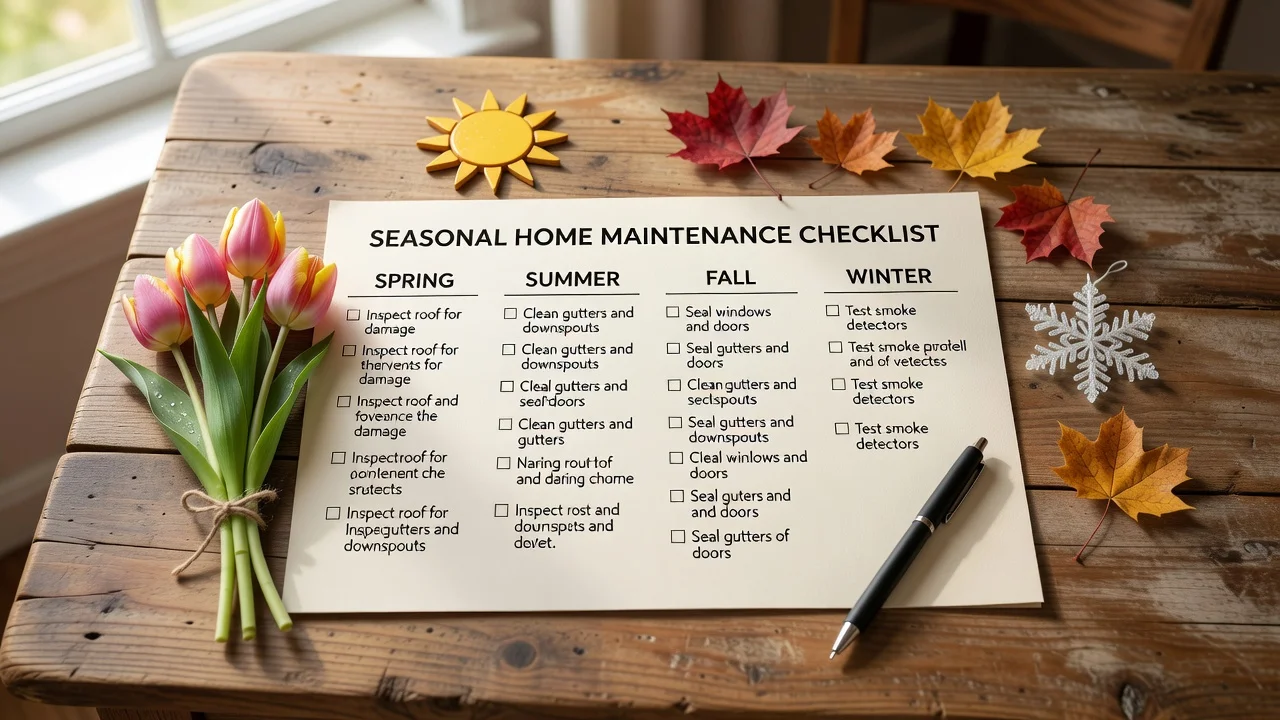
Congratulations — you own a home. Now what?
Owning a home means you're the landlord, the maintenance crew, and the emergency-response team all in one. The good news? Most problems don't sneak up on you if you stay ahead of the seasons.
This seasonal maintenance checklist breaks down exactly what to do each quarter. Print it, bookmark it, or stick it on the fridge. Your home will thank you — and so will your wallet.
Spring Maintenance Checklist (March – May)
Spring is recovery season. Winter was rough on your house — freeze-thaw cycles, ice dams, heavy snow loads. Your job is to find the damage before it becomes a renovation.
Exterior
- Inspect roof for winter damage — Look for missing, curled, or cracked shingles. Check flashing around chimneys and vents. Use binoculars from the ground; call a pro if you spot anything suspicious.
- Clean gutters and downspouts — Remove leaves, pine needles, and debris. Flush downspouts with a garden hose to clear clogs. Make sure water drains at least 4 feet from the foundation.
- Check foundation for cracks — Walk the entire perimeter. Hairline cracks are normal. Cracks wider than 1/8 inch or that form a stair-step pattern in brick warrant a professional look.
- Inspect siding and exterior paint — Look for peeling, bubbling, or rot. Touch up paint before moisture gets behind the siding.
- Check windows and doors for air leaks — Hold a lit incense stick near edges on a windy day. If the smoke wavers, add weatherstripping or caulk.
- Test the sprinkler system — Turn it on manually and check for broken heads, leaks, or overspray onto the house.
- Inspect the driveway and walkways — Fill small cracks with concrete patch. Large cracks or uneven settling may need professional repair.
- Clean and seal the deck or patio — Sweep debris, wash with a deck cleaner, and apply sealant if needed. Check for loose boards or popped nails.
Interior
- Service the air conditioner — Replace the filter. Clean condenser coils (hose off debris). Schedule a professional tune-up every 2–3 years.
- Test smoke and CO detectors — Press the test button. Replace batteries if needed. Replace units older than 10 years.
- Check the water heater — Flush the tank to remove sediment. Check the pressure relief valve by lifting the lever — water should flow freely and stop when released.
- Inspect attic for leaks and pests — Look for water stains, daylight through the roof sheathing, droppings, or nests.
- Deep clean the kitchen and bathroom vents — Remove covers and vacuum dust. Grease buildup in kitchen vents is a fire hazard.
- Check under sinks for leaks — Run water and let it sit. Look for drips, corrosion, or soft cabinet bottoms.
Pro tip: Take photos of any damage you find. Date-stamped photos help with insurance claims and make it easier to track changes year over year.
Summer Maintenance Checklist (June – August)
Summer is about keeping cool systems running efficiently and tackling outdoor projects while the weather cooperates.
Exterior
- Inspect the roof again after storm season — Summer thunderstorms can lift shingles and damage flashing. A quick visual check after every major storm saves headaches.
- Trim trees and shrubs away from the house — Branches touching the roof or siding provide a highway for pests and can damage shingles in high wind. Keep at least 3 feet of clearance.
- Check the fence and gate hardware — Tighten loose hinges and latches. Replace rotted posts. Stain or paint as needed.
- Service the lawn mower and outdoor tools — Sharpen blades, change oil, clean air filters. A well-maintained mower cuts cleaner and lasts longer.
- Inspect outdoor faucets and hose bibs — Turn on each bib and check for leaks. Make sure the water shuts off completely when closed.
- Check the garage door — Lubricate the track and rollers. Test the auto-reverse safety feature by placing a block of wood under the door — it should stop and reverse on contact.
Interior
- Monitor basement humidity — Ideal range is 30–50%. Summer humidity above 60% promotes mold. Use a dehumidifier if needed.
- Check the sump pump — Pour a bucket of water into the sump pit. The pump should kick on and drain quickly. If it doesn't, repair or replace before the next heavy rain.
- Inspect caulking around showers and tubs — Re-caulk any gaps or cracks. Water that gets behind tile causes mold and structural damage.
- Run garbage disposal with ice and salt — Drop a tray of ice cubes and a handful of coarse salt into the disposal while running cold water. This sharpens the blades and clears grease buildup.
- Test all ceiling fans — Set them to counterclockwise (summer mode) for maximum cooling. Tighten any wobbling blades.
Pro tip: Summer is the best time to tackle big exterior projects — painting, sealing, roof repairs — because temperatures are stable and daylight is long.
Fall Maintenance Checklist (September – November)
Fall is winter-prep season. The work you do now determines whether winter is a minor inconvenience or a major disaster.
Exterior
- Clean gutters a final time — Fall leaves are the main culprit for clogs. After the last leaves fall, do a complete gutter cleanout and make sure downspouts are clear.
- Inspect and clean the chimney — If you have a wood-burning fireplace, schedule a professional sweep. Creosote buildup is a leading cause of chimney fires.
- Drain and winterize outdoor faucets — Shut off interior shutoff valves (if you have them). Disconnect garden hoses. Drain outdoor faucets and install insulated covers.
- Seal driveway cracks and re-seal asphalt — Apply crack filler followed by a fresh coat of sealant. Do this on a dry day above 50°F.
- Check weatherstripping on all doors — Cold air finds the smallest gaps. Replace worn or compressed weatherstripping. Install door sweeps if gaps exist at the bottom.
- Inspect the roof for loose or missing shingles — Don't let small problems become leak sources during snow season.
- Bring in or cover outdoor furniture — Store cushions indoors. Cover or store grills, planters, and decorative items.
- Check the attic ventilation — Good airflow prevents ice dams. Make sure soffit vents aren't blocked by insulation.
Interior
- Service the heating system — Replace the furnace filter. Schedule a professional inspection for gas or oil furnaces every 1–2 years.
- Reverse ceiling fans — Switch to clockwise (winter mode) at low speed. This pushes warm air trapped at the ceiling back down into the room.
- Check for drafts around windows — Apply removable caulk cord or window insulation film to leaky windows. Heavy curtains add another layer.
- Test the fireplace and carbon monoxide detector — If you have a gas fireplace, light it now to confirm it works before you need it. CO detectors are required within 15 feet of any fuel-burning appliance.
- Flush the water heater again — Yes, twice a year is ideal. Sediment buildup reduces efficiency and shortens the unit's life.
- Check smoke detector batteries again — Daylight Saving Time change is a good reminder. Change batteries when you change the clocks.
- Inspect the attic for animal entry — Look for gaps, holes, or chewed areas where squirrels, raccoons, or mice could enter. Mice fit through a hole the size of a dime.
Pro tip: Schedule your furnace inspection before the first cold snap. HVAC technicians book up fast in October and November — you don't want to be on a waitlist when the temperature drops.
Winter Maintenance Checklist (December – February)
Winter is monitoring season. Your goal is to catch problems early before they escalate into emergencies.
Exterior (as weather allows)
- Monitor snow load on the roof — If snow exceeds 2 feet on a sloped roof or 1 foot on a flat roof, consider having it removed. Use a roof rake from the ground — never climb a snowy roof.
- Watch for ice dams — Icicles hanging from the edge of the roof + water stains on interior ceilings = ice dam. Ice melt pucks on the roof edge or hiring a steam professional can help.
- Keep walkways and steps clear — Shovel and salt promptly. Icy steps are a liability. Use pet-safe de-icer if you have animals.
- Check gutters for ice buildup — Ice in gutters means water isn't draining. It can back up under the roof edge and cause interior leaks.
Interior
- Keep cabinet doors open during extreme cold — On nights below 20°F, open kitchen and bathroom cabinet doors to let warm air circulate around pipes, especially if they're on exterior walls.
- Let faucets drip during freeze warnings — A slow drip prevents pipes from freezing by relieving pressure. Focus on faucets on exterior walls.
- Monitor indoor humidity — Winter air is dry. Too dry (below 30%) and you'll have static shocks, dry skin, and cracked wood floors. Use a humidifier to maintain 30–45%.
- Check for drafts — On windy days, run your hand along window and door frames. Cold air infiltration means your heating system is working harder than it should.
- Inspect exposed pipes in the basement and crawlspace — Check for frost, condensation, or bulging. Insulate any pipes that feel cold to the touch.
- Test the emergency shutoffs — Locate and test your main water shutoff, gas shutoff (if applicable), and electrical panel main breaker. You don't want to search for these in an emergency.
- Clean the refrigerator coils — Dust on condenser coils makes the fridge work harder. Vacuum them out for better efficiency.
Pro tip: Keep a winter emergency kit — flashlight, batteries, blanket, bottled water, non-perishable snacks, and a manual can opener — in case of a power outage during a storm.
Printable Quick-Reference Calendar
Here's a one-page summary you can print and check off each month:
Spring (Mar–May)
| Month | Priority Tasks |
|---|---|
| March | Roof inspection, gutter clean, smoke/CO detectors, AC filter |
| April | Foundation check, siding/paint touch-up, water heater flush |
| May | Deck/patio clean and seal, sprinkler test, window caulking |
Summer (Jun–Aug)
| Month | Priority Tasks |
|---|---|
| June | Tree trimming, fence repair, garage door lube, sump pump test |
| July | Attic inspection, basement humidity check, outdoor faucet check |
| August | Bathroom caulking, garbage disposal cleaning, fan direction check |
Fall (Sep–Nov)
| Month | Priority Tasks |
|---|---|
| September | Gutter clean, chimney sweep, furnace filter, drain outdoor faucets |
| October | Weatherstripping, window insulation, fireplace test, CO detector |
| November | Driveway sealing, attic vent check, outdoor furniture storage |
Winter (Dec–Feb)
| Month | Priority Tasks |
|---|---|
| December | Pipe insulation check, cabinet doors open during cold snaps, emergency kit |
| January | Ice dam monitoring, indoor humidity check, refrigerator coils |
| February | Snow load monitoring, drip faucets during freeze warnings, test shutoffs |
What It Costs to Skip Seasonal Maintenance
The numbers speak for themselves:
| Deferred Task | Fix Cost When Proactive | Emergency Repair Cost |
|---|---|---|
| Gutter cleaning | $100–$200 | $1,000–$5,000 (water damage, foundation issues) |
| HVAC filter replacement | $10–$30 | $500–$3,000 (compressor failure, frozen coils) |
| Water heater flushing | Free (DIY) | $800–$1,500 (tank replacement from sediment) |
| Roof inspection | Free (DIY) or $150 (pro) | $5,000–$15,000 (leak repair, rot, mold) |
| Pipe insulation | $20–$50 | $500–$5,000 (burst pipe + water damage) |
| Chimney cleaning | $100–$250 | $10,000+ (chimney fire damage) |
A few hours and a few dollars each season buys you peace of mind — and avoids five-figure surprises.
Final Thoughts
Seasonal home maintenance isn't about being perfect. It's about being consistent. Pick one task each weekend. Write it on the calendar. The difference between a home that costs you money and a home that saves you money is simply showing up — season after season.
Start with this season's checklist. Check off one thing tomorrow. You've got this.
~2,172 words. Published 2026-06-10. Pillar: Just bought a house?.
Was this article helpful?
Get weekly DIY tips
No spam, unsubscribe anytime.
Newsletter signup coming soon.