Should I DIY Electrical Work or Hire a Licensed Electrician
Electrical work is one of the few areas where the DIY-vs-hire decision is less about saving money and more about liability, safety, and your home's resale value
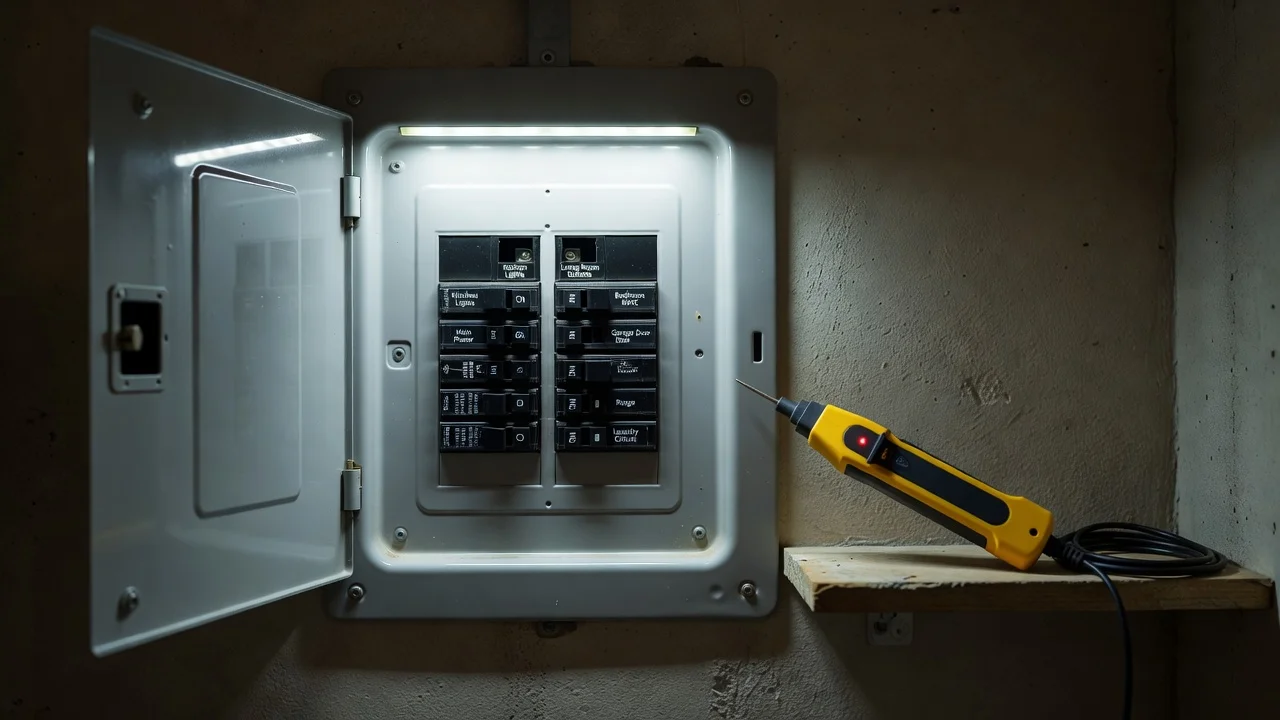
Electrical work is one of the few areas where the DIY-vs-hire decision is less about saving money and more about liability, safety, and your home's resale value. Roughly 400 Americans die from electrocution each year, and electrical failures cause about one in every seven residential fires, according to the U.S. Consumer Product Safety Commission. Some of that work you can absolutely do yourself in 2026: swapping a like-for-like light fixture, replacing an outlet, or installing a smart switch on an existing circuit. Anything that involves the service panel, new circuits, or aluminum-to-copper transitions should go to a licensed electrician. This article walks through which jobs are safe for a homeowner, which require a permit, and how to think about the real cost of DIY electrical work before you touch a wire.
The Real Risks of DIY Electrical Work
The danger with electrical work isn't usually the shock itself. It's the loose connection you didn't notice, the undersized wire you installed, or the missing GFCI protection that passes a quick test but fails three years later behind drywall. The National Fire Protection Association (NFPA) reports that electrical distribution and lighting equipment is the leading cause of home structure fires in the U.S. — responsible for roughly 13% of all home fires. Most of those fires are in owner-occupied homes that were built 20+ years ago, meaning a lot of the wiring in your house was installed before current code existed.
There's also a paper trail risk. Unpermitted work can void your homeowner's insurance, complicate a sale, and fail inspection when you refinance. According to the NFPA 70 National Electrical Code, the current U.S. standard updated in 2023 and enforced in most jurisdictions by 2026, almost any new circuit, panel change, or significant addition requires a permit and inspection. Replacing a broken outlet in the same location usually does not. Adding a new outlet almost always does.
If your homeowner's insurance adjuster finds unpermitted electrical work after a fire, they can deny the claim. Permits exist to create a record of safe installation — not to generate fees.
Electrical Work You Can Safely DIY in 2026
A homeowner with no formal training can handle a short list of tasks without stepping into serious danger. These are jobs that don't change the wiring on the circuit, only the device at the end:
- Replacing a light fixture (same mounting bracket, same weight class)
- Swapping a standard outlet for a GFCI outlet (if the wiring is already grounded)
- Replacing a single-pole or three-way switch (match the existing wiring configuration)
- Installing a smart switch or dimmer in place of a mechanical one on a neutral-equipped circuit
- Changing a cover plate on any device
The rule of thumb: if you're not adding wire, not adding a device location, and not opening the panel, you're probably fine. If any of those three things are happening, stop and call a pro.
Electrical Work That Requires a Licensed Electrician
Anything that changes the load on your service panel or introduces new wiring should be handled by a licensed electrician. The list is longer than most homeowners expect:
- Panel upgrades or replacements (including 100A to 200A swaps)
- New circuits, including dedicated appliance lines (EV charger, hot tub, mini-split)
- Rewiring any portion of the home, especially knob-and-tube or aluminum branch circuits
- Subpanel installation
- Service-side work, including meter base changes
- Whole-home surge protection tied into the panel
- Aluminum branch circuit remediation (AlumiConn or COPALUM connectors)
The International Brotherhood of Electrical Workers (IBEW) and the National Electrical Contractors Association (NECA) jointly operate training programs that produce journeyman and master electricians. A master electrician has typically completed 8,000+ hours of supervised work and passed a state licensing exam. That's the level of training you're tapping when you hire out.
"Licensed" means different things in different states. Some require only a journeyman credential; others require a master electrician for any work that needs a permit. Check your state contractor's board before hiring — your electrician's license number should be verifiable on the state website.
The Permit Question: When It's Required, When It Isn't
Permits exist so a third party (the local building inspector) can verify that the work meets the currently adopted version of the National Electrical Code. Most jurisdictions follow the 2023 NEC as of 2026, though a handful of states are still enforcing the 2020 edition.
| Job | Permit Required? | Who Should Do It |
|---|---|---|
| Replace a light fixture (no new wiring) | No | Homeowner |
| Swap a standard outlet for GFCI | No | Homeowner |
| Add a new outlet on an existing circuit | Usually no, but check locally | Homeowner if permitted |
| Add a new circuit | Yes | Licensed electrician |
| Replace a breaker | Yes | Licensed electrician |
| Install a 240V appliance outlet (dryer, range, EV) | Yes | Licensed electrician |
| Replace the electrical panel | Yes | Licensed electrician |
| Whole-home rewire | Yes | Licensed electrician |
Pulling a permit in 2026 typically costs $75-$400 depending on the scope and your jurisdiction. A new circuit permit in a mid-sized metro averages $150-$200, with the inspection bundled in. If your electrician pulls the permit, the cost is usually rolled into their quote.
What It Actually Costs to Hire a Licensed Electrician in 2026
Labor rates climbed another 4-6% in 2025, and the U.S. Bureau of Labor Statistics projects electrician employment to grow 8% through 2032 — faster than average. That means tighter schedules and higher minimum trip charges.
| Job | Typical 2026 Cost Range | Notes |
|---|---|---|
| Service call / minimum trip charge | $100-$200 | Often credited toward the work |
| Replace a standard outlet | $120-$180 | Per outlet, including device |
| Install a new 120V/20A circuit | $300-$650 | Depends on distance from panel |
| Dedicated 240V/50A circuit (EV charger) | $700-$1,800 | Panel capacity check included |
| Electrical panel replacement (200A) | $2,000-$4,500 | Permit included in most quotes |
| Add a subpanel | $1,000-$2,500 | For garage, basement, addition |
| Whole-home rewire (1,500-2,000 sq ft) | $12,000-$25,000+ | Often done during major renovations |
In 2026, the average U.S. electrician charges $85-$130 per hour for labor, with a one- to two-hour minimum. Materials are billed separately at retail-plus or wholesale-plus markup.
How to Tell If a Job Is Beyond You
Pull the cover off a switch or outlet and look. If you see solid copper conductors wrapped neatly around screw terminals, you've got modern wiring. If you see fabric-insulated wires, aluminum conductors, or backstabbed connections (wires pushed into holes on the back of the device instead of wrapped around screws), you need a licensed electrician regardless of how simple the job looks. Aluminum branch wiring, in particular, requires special connectors and techniques to be made safe.
Three more red flags mean you should stop immediately:
- Two-prong ungrounded outlets in an older home — replacing them with three-prong outlets without running a ground is a code violation and a shock risk.
- A panel that feels warm, has rust, or shows scorch marks.
- Flickering lights paired with burning smells — call an electrician the same day, not next week.
The Cost of Getting It Wrong
A failed DIY electrical job is rarely a "redo it once and learn" situation. The most common expensive consequences:
- Arc-fault fires from backstabbed connections — a leading cause of insurance claims.
- Failed home inspections when selling, requiring you to open walls and re-do work to close the sale.
- Insurance claim denials after a fire where unpermitted work is discovered.
- Voided manufacturer warranties on appliances and EV chargers that require licensed installation.
If your goal is to save money on a single small job, you will. If your goal is to keep your home insurable and your family safe, the math almost always favors hiring out for anything beyond the most basic replacements.
Buy a non-contact voltage tester (affiliate link) and a GFCI tester (affiliate link) before you touch anything. Test every wire, every time, even if you "know" the breaker is off. Breaker labels are wrong more often than you think.
When DIY Actually Makes Sense
There is a real case for doing simple electrical work yourself: faster scheduling, no trip charge, and the satisfaction of handling your own home. For a homeowner with steady hands, decent instructions (the manufacturer's instructions count as code in most jurisdictions), and a comfort level reading wiring diagrams, the safe-DIY list is real.
The middle ground that often works well: hire an electrician for the rough-in work and new circuits, then do the finish work yourself once the inspection passes. Many electricians are happy to do panel-and-circuit work while the homeowner installs the devices, trim plates, and light fixtures on top.
FAQ
Do I need a permit to replace an electrical outlet myself?
In most U.S. jurisdictions, no. Like-for-like outlet replacement on an existing circuit doesn't require a permit. Adding a new outlet location, running new wire, or working in the panel does. Check your local building department's website — most publish a plain-English list of what does and doesn't need a permit.
Can a homeowner legally do their own electrical work in every state?
Almost every state allows homeowners to do electrical work on their own primary residence, but the rules around permits and inspections vary widely. Some states (Texas, for example) have no state-level licensing for electricians; others (California, Florida) require a license for any paid work and have specific owner exemption clauses. Your homeowner's insurance policy may also have its own requirements.
How much does an electrical permit cost in 2026?
Most jurisdictions charge $75-$400 for an electrical permit in 2026, with the average sitting around $150-$200 for a single new circuit. Panel replacements and whole-home rewires can run $300-$800. Some municipalities combine the permit and inspection into one fee; others bill separately.
What's the average cost to rewire a house in 2026?
A whole-home rewire for a 1,500-2,000 square foot house in 2026 runs $12,000-$25,000+, depending on the region, accessibility (crawlspaces, finished basements), and how many devices you're adding. The job typically takes 3-7 working days for a two-electrician crew. For related home systems work, see our guides on /how-to-install-a-ceiling-fan/ and /breaker-keeps-tripping/.
Is it cheaper to DIY electrical work?
Sometimes, but not always. The cost savings come from skipping labor ($85-$130/hr in 2026), not from skipping materials — you'll pay the same retail prices at the big-box store. For a single outlet swap, DIY saves maybe $100. For a panel replacement, DIY isn't legal in most jurisdictions without a license and the savings are zero because you can't pull the permit.
How do I find a good licensed electrician?
Start with your state contractor licensing board to verify the license is current and there are no disciplinary actions. Ask for at least three local references from the past 12 months. Get a minimum of two written quotes for anything over $1,000. And confirm they pull the permit — if an electrician asks you to pull the homeowner permit, find a different electrician. For more home repair context, see /how-to-fix-a-leaky-faucet/ and /how-to-silence-a-noisy-refrigerator/.
~1,911 words. Published 2026-06-09. Pillar: DIY or hire a pro?.
Was this article helpful?
Get weekly DIY tips
No spam, unsubscribe anytime.
Newsletter signup coming soon.